How to photograph a pet | ImgGo
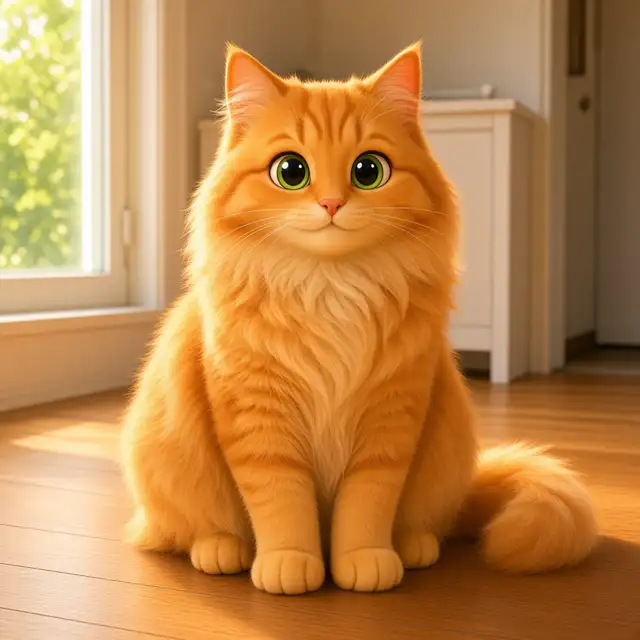
Keep the ears, eyes, and body in the frame. The first line names the animal, the coat, and one feature that must stay. The picture is an illustrated cat.
Oct 21, 2026 · ImgGo
The 3D animated-film preset rounds the volume and softens the light. On a cat or a dog, the ear shape, the eye color, and the tail are the first things to lose. Get them into the photo.
Shooting
Get the whole animal in frame, or at least the full head and chest. A nose by itself gets a second ear that was not there. Focus on the eyes. A hard flash turns them into two white discs, and the original eye color is harder to keep.
Grass, a sofa, or a rug is enough background. Do not pile toys, bowls, and leashes on the body. They get drawn as part of the animal.
If two animals share the frame, leave a gap. Similar fur that touches often becomes one animal.
The first line
Name the species, the coat, and one feature that has to stay. For example: "3D animated film, orange short-haired cat, keep the white paws, pale background." Do not ask for a realistic photo and an animated film in the same line.
The next round fixes one thing: "Make the ears sharper" or "Return the eyes to green. Do not redraw the body."
Poor fits
Text on a collar or a clinic name usually cannot be read. The image is not a breed check. Soft light warms the coat. If a show or a record needs the real color, keep the original photo.
The cat above is an example of the volume and the light.